
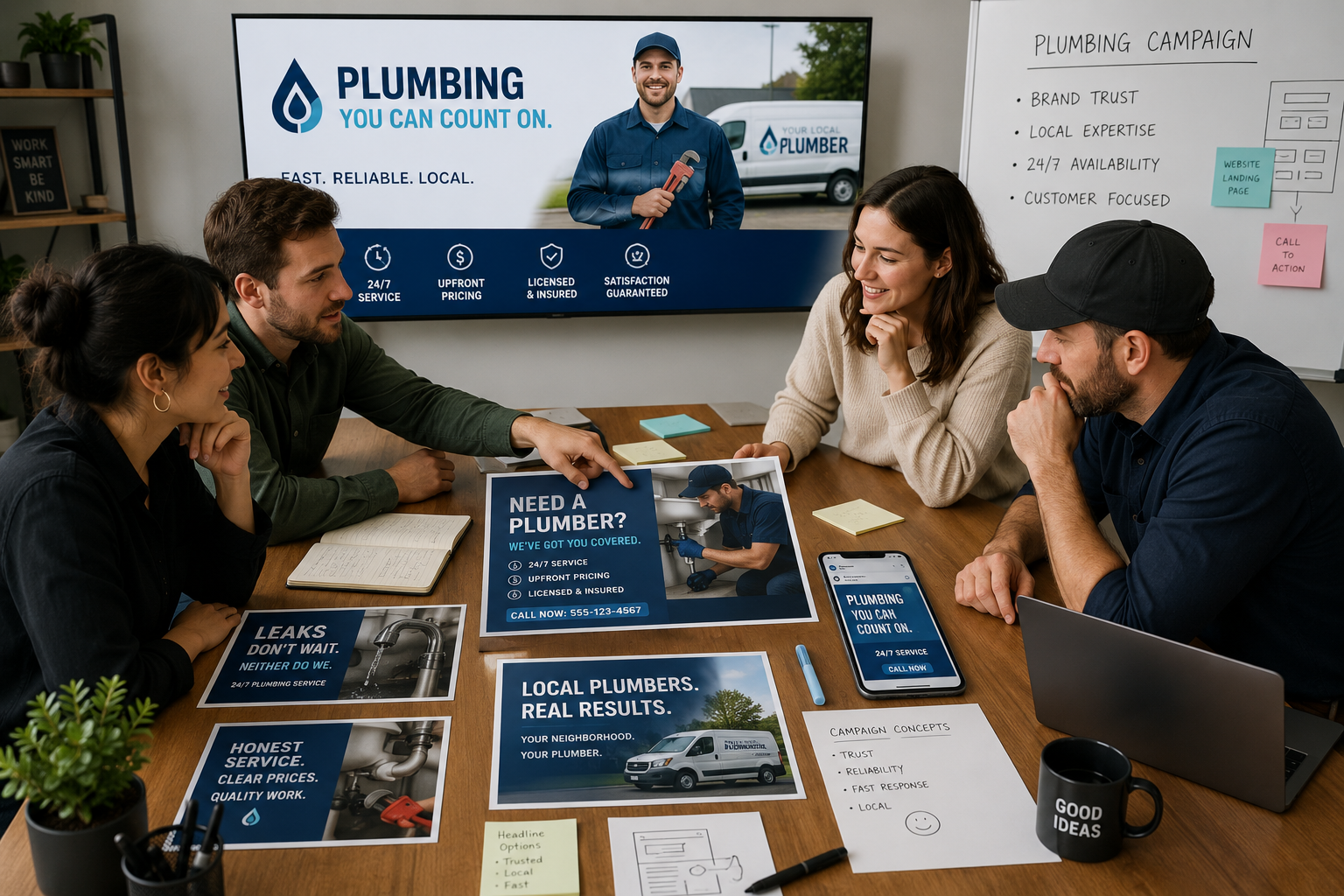
Plumbing marketing works best when it follows a clear roadmap, not a random list of tactics. To get more booked jobs, plumbing companies need to know which services they want to grow, how homeowners search for help, what turns a website visit into a call, and which campaigns actually create revenue.
This guide breaks down plumbing marketing ideas into a step-by-step system: choosing the right jobs, getting found locally, converting searches into leads, booking more calls, staying visible before emergencies happen, and measuring what works. Use it to build a smarter, more profitable marketing plan.
The Plumbing Marketing Roadmap: From Visibility to Revenue
Plumbing marketing is not about trying every tactic at once. It is about building a system that helps a plumbing company get found, earn trust, convert calls, and measure which campaigns create profitable jobs.
The roadmap is simple:
- Choose the plumbing jobs you want to grow
- Get found when homeowners need help
- Turn searches and clicks into calls
- Turn calls into booked appointments
- Measure revenue and scale what works
This gives the strategy a clear path before moving into specific plumbing marketing ideas
Maximize your campaign’s success. Contact ESB Advertising to launch your strategic plumbing roadmap
How To Ensure Your Plumber Marketing Campaign is a Success
Step 1: Choose the Plumbing Jobs You Want to Grow
Before spending money on SEO, PPC, Local Services Ads, social media, or direct mail, plumbing companies need to decide what kind of demand they actually want. A company trying to grow sewer line repair should not run the same marketing plan as a company trying to fill the schedule with water heater replacements or emergency drain cleaning.
Separate Emergency Calls From Planned Plumbing Work
Emergency calls are urgent, high-intent, and usually decided quickly. Planned plumbing work often requires more trust, education, reviews, and follow-up. Separating these two categories helps shape the right message, landing page, ad campaign, and call-handling process.
Prioritize High-Value Services Before Choosing Channels
Plumbing marketing works better when campaigns are organized around valuable job types, not just broad terms like “plumber near me.” Sewer repair, water heater replacement, drain cleaning, leak detection, and emergency plumbing may each need different budgets, offers, pages, and tracking.
Step 2: Get Found When Homeowners Need Plumbing Help
Once the target jobs are clear, the next step is visibility. Homeowners usually search for plumbing services when they have a specific problem. The company that appears in Google Search, Google Maps, paid ads, and trusted local results has the best chance of winning the call.
Use Local SEO to Show Up for Real Plumbing Problems
Local SEO should focus on the problems homeowners are already searching for when they need plumbing help. Service-specific pages help plumbing companies appear for those high-intent searches while guiding visitors toward the right next step.
Use PPC and Local Services Ads for Immediate Demand
SEO builds long-term visibility, but PPC and Local Services Ads can capture urgent demand faster. These campaigns should focus on plumbing searches that are most likely to become booked appointments, with success measured by revenue quality rather than raw lead volume.
Step 3: Turn Searches, Clicks, and Visits Into Plumbing Leads
Visibility is only useful if people take action. Once a homeowner lands on a website, ad, or profile, the marketing has to make calling or booking feel simple, trustworthy, and immediate.
Build Service-Specific Landing Pages
A drain cleaning landing page should not say the same thing as a water heater page or an emergency plumbing page. Each page should match the customer’s problem, explain the service clearly, build trust, and make the next step obvious.
Make Calls and Forms Easy to Complete
Plumbing leads are often time-sensitive. Phone numbers, forms, buttons, and service-area details should be easy to find, especially on mobile. If the customer has to search for how to contact the company, the page is already losing conversions.
Step 4: Turn More Plumbing Calls Into Booked Appointments
Many plumbing companies think they have a lead problem when they actually have a conversion problem. Missed calls, poor follow-up, and unclear booking processes can make strong marketing campaigns look ineffective.
Track Missed Calls and Call Quality
Call tracking helps show whether campaigns are producing useful conversations. A plumbing company should know how many calls were answered, how many were missed, which calls were qualified, and which ones became booked appointments.
Connect Every Lead Source to the Booking Outcome
A lead source is only useful if it can be tied to results. Connecting calls, forms, CRM data, and booked jobs helps plumbing companies see whether SEO, PPC, Local Services Ads, direct mail, social media, or programmatic campaigns are producing real revenue.
Step 5: Measure Revenue and Scale What Works
The final step is measurement. Plumbing marketing should not be judged only by impressions, clicks, or calls. It should be judged by qualified leads, booked appointments, completed jobs, revenue, and ROI.
Compare Cost Per Lead With Cost Per Booked Job
Cost per lead can be misleading if the leads are not turning into revenue. Cost per booked job gives plumbing companies a clearer view of campaign quality because it connects marketing spend to actual appointment outcomes.
Use Attribution to Understand the Full Customer Journey
A homeowner might see a video ad, receive a mailer, search on Google, read reviews, and then call from a paid ad. Multi-touch attribution helps show how those channels work together instead of giving all credit to the last click.
Scale the Channels That Create Profitable Plumbing Jobs
Once the data shows which campaigns generate profitable work, the company can scale with more confidence. ESB Advertising’s Mackdata platform helps connect campaigns to CRM activity and revenue, so plumbing companies can invest in the channels that actually produce booked jobs.
Turn website traffic into high-paying jobs. Let ESB optimize your plumbing lead conversion
Ensure a Successful Plumbing Advertising Campaign
Why Choose ESB Advertising to Run the Next Ad Campaign for Your Plumbing Business?
Plumbing companies need more than ads that generate clicks. They need campaigns that connect visibility, calls, booked jobs, and revenue. ESB Advertising helps plumbing businesses build smarter campaigns across paid search, Local Services Ads, SEO, programmatic, traditional media, creative, and analytics, with reporting that shows what is actually working.
Plumbers Work With ESB Advertising For
Strategic Growth for Plumbing Businesses
ESB Advertising focuses entirely on the outcomes that drive business growth, tracking everything from qualified leads and booked appointments to cost per lead and overall revenue. Instead of judging success by impressions or clicks alone, ESB connects campaign performance directly to bottom-line results. This approach helps plumbers clearly understand which marketing channels deserve a larger budget and which ones require optimization.
Full-Funnel Advertising for Local Plumbing Demand
The path to hiring a plumber is rarely linear, often involving an initial ad view, a Google search, a review check, and a landing page visit before a call is ever made. ESB builds comprehensive campaigns that cover this entire customer journey by integrating paid search, local services ads, search engine optimization, social media, programmatic advertising, direct mail, and creative asset development. This ensures plumbing companies remain visible at every stage of the consumer decision-making process.
Mackdata Attribution Shows What Is Actually Working
The Mackdata platform bridges the gap between marketing initiatives and actual business data by syncing campaigns directly with CRM records, phone calls, booked jobs, and revenue. This integration provides plumbing businesses with precise attribution across all marketing channels, removing the guesswork from growth strategies. With this level of clear reporting, your team can easily eliminate wasted ad spend, scale profitable campaigns, and make data-driven marketing decisions.
