
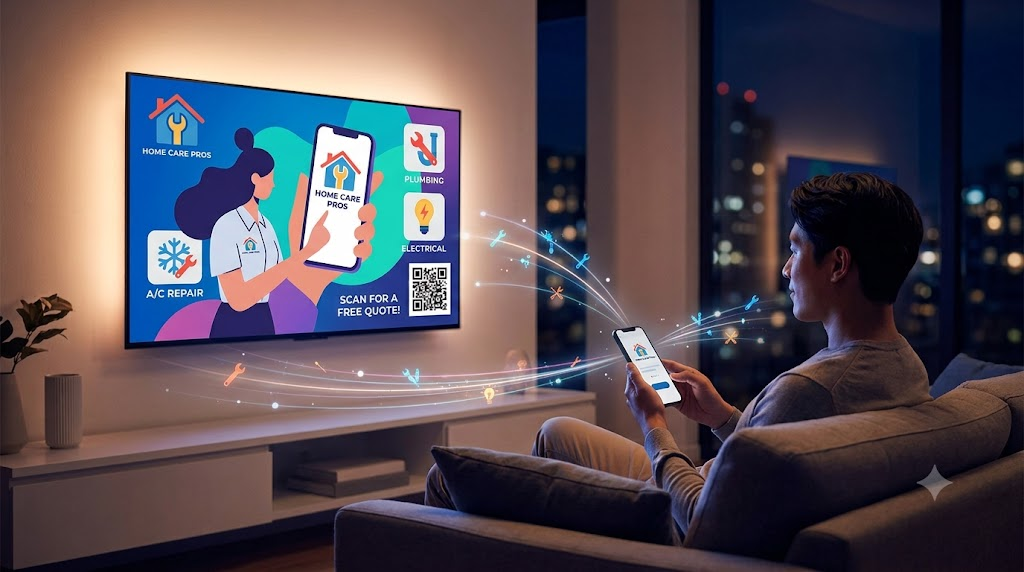
Streaming has changed more than where people watch television. It has changed how viewers divide their attention, respond to advertising and act after seeing a commercial. Brands can no longer assume that a traditional 30-second spot will hold attention simply because it appears on a large screen.
Creating engaging TV ads for streaming viewers requires a stronger opening, a clearer message and creative designed for connected devices. It also requires advertisers to use audience data, interactive formats and campaign measurement to improve performance instead of relying only on reach and impressions.
Why Traditional TV Advertising Must Adapt to Streaming Viewers
Traditional television creative was built for scheduled programming, shared viewing and relatively predictable commercial breaks. Streaming audiences behave differently. They move between devices, expect personalized experiences and often use another screen while watching, forcing advertisers to compete more deliberately for attention.
- Attention is more divided. Streaming viewers may browse social media, answer messages or search for products while watching. TV ad creative must communicate its central idea quickly before attention shifts elsewhere.
- Repeated commercials create ad fatigue. Showing the same spot too frequently can reduce interest and brand affinity. Creative rotation and frequency management help prevent repetitive ads from becoming an annoyance.
- Viewers expect greater relevance. Streaming platforms make more precise audience targeting possible. Generic advertising can feel out of place when viewers are accustomed to personalized recommendations and relevant digital experiences.
- Viewing environments constantly change. Connected TV ads may appear on smart TVs, mobile devices, tablets or streaming sticks. Creative must remain clear, legible and compelling across different screens.
- Streaming creates measurable actions. Advertisers can track website visits, QR code scans, conversions and revenue after exposure. This makes campaign performance more important than impressions alone.
Don’t let outdated strategies waste your budget. Let ESB modernize your TV campaigns today
Create a Modern Streaming TV Ad Campaign
A Five-Step Plan for Creating Engaging TV Ads for Streaming Viewers
The strongest streaming campaigns combine creative quality with precise delivery and continuous optimization. Rather than treating a connected TV commercial as a traditional broadcast spot placed on a different platform, advertisers should build the campaign around how streaming audiences actually watch and respond.
Step 1: Capture Viewer Attention in the First Few Seconds
The opening moments of a streaming commercial carry disproportionate weight. A slow introduction, lengthy logo animation or vague establishing shot gives viewers time to disengage before the core message appears.
Begin with a recognizable problem, surprising image, direct question or strong statement that makes the value of the ad immediately clear. The viewer should understand what the commercial is about within the first few seconds, even if the full offer is explained later.
A strong opening generally includes:
- A visually distinctive first frame that stands apart from surrounding content.
- A clear focal point rather than multiple competing images or messages.
- An immediate connection to a customer need, aspiration or frustration.
- Early brand cues that support recognition without overwhelming the story.
- A reason to continue watching, such as curiosity, tension or a promised outcome.
Opening-frame optimization does not mean making every ad loud or frantic. It means removing unnecessary setup and giving the audience a clear reason to pay attention. A well-designed creative hook can be emotional, practical, humorous or unexpected, provided it connects naturally to the brand and offer.
Step 2: Use Emotional Storytelling to Make the Ad Memorable
Viewers rarely remember every product feature or line of dialogue. They are more likely to remember how an advertisement made them feel and whether the story connected with something familiar.
Effective TV ad creative uses emotional storytelling to turn a commercial into a coherent experience. The story does not need to be elaborate. A simple before-and-after scenario, customer challenge, moment of relief or humorous situation can make the message more memorable than a list of claims.
Strong streaming commercials typically establish three elements:
- A relatable person, situation or need.
- A moment of change that demonstrates the value of the product or service.
- A clear connection between the outcome and the advertised brand.
The narrative must reinforce your commercial objective, ensuring the story enhances rather than distracts from ad recall. Prioritize strong visual storytelling, like expressions and demonstrations, so distracted viewers can follow along without dialogue. Finally, integrate brand cues early and naturally throughout the commercial, rather than waiting until the final seconds, to maximize recognition and protect brand recall.
Step 3: Adapt the Creative to the Streaming Experience
A commercial created for broadcast television will not automatically work as streaming-first creative. Connected TV advertising reaches audiences across smart TVs, mobile devices and other streaming environments with different screen sizes, sound settings and viewing behaviors.
Make the Message Clear With or Without Sound
Streaming viewers may have the volume low, be speaking with someone or be watching in a distracting environment. On-screen text, product visuals and clear sequencing help preserve comprehension when part of the dialogue is missed.
Use short phrases, strong contrast and large typography. Captions should support the commercial rather than turn it into a presentation slide.
Produce Creative for Different Placements
The creative must also account for technical quality and the surrounding viewer experience. Abrupt volume changes, poor aspect ratios, low-resolution assets and jarring transitions can make an ad feel intrusive.
Rather than forcing one asset into every placement, consider producing:
- A 30-second storytelling commercial.
- A 15-second reminder.
- A shorter response-focused variation.
- Alternative openings for creative testing.
- Retargeting versions for exposed audiences.
Modular creative production allows the campaign to adapt without repeatedly showing the same commercial.
Step 4: Make the Ad Interactive and Relevant
Streaming advertising can do something traditional broadcast television generally cannot: connect household-level exposure with more immediate digital action.
Interactive calls to action can turn passive viewing into measurable engagement. QR codes, short URLs, promotional offers and shoppable ads give interested viewers a direct next step. These tools are particularly useful when people are already using a phone while watching television.
A successful interactive element should be:
- Visible long enough to scan or remember.
- Supported by a concise verbal instruction.
- Connected to a useful destination rather than a generic homepage.
- Easy to complete on a mobile device.
- Relevant to the message and stage of the customer journey.
Only include a QR code if there is a clear incentive to scan, such as an offer or appointment booking. To maximize relevance, use audience targeting data to deliver tailored ad versions to different segments. Finally, reinforce your message and drive conversions by using cross-device retargeting to follow up on second screens after the initial TV exposure.
Step 5: Rotate, Test and Optimize the Campaign
Even strong commercials lose effectiveness over time. This creative wear-out reduces attention and increases viewer irritation. To counter this, build multiple assets before launch by varying edits, hooks, and lengths from the main production. You can also use ad sequencing to guide viewers through a planned progression, moving them from initial brand introduction to response-focused solutions.
Testing should compare meaningful creative variables rather than making random changes. Advertisers can evaluate:
- Different opening hooks.
- Emotional versus practical messaging.
- Product-led versus customer-led storytelling.
- 15-second versus 30-second formats.
- Different offers and calls to action.
- Interactive versus non-interactive versions.
Optimize campaigns by balancing creative results with media delivery data, prioritizing the metrics that match your specific objectives. Manage frequency closely to monitor when response declines and fresh creative is needed. Ultimately, aim to build a flexible asset system that can be continuously tested, rotated, and improved based on real-time audience behavior and conversion signals.
Ready to launch a high-performing campaign? ESB Advertising handles everything from concept to conversion
Discuss a Streaming TV Ad Campaign
How to Measure Streaming TV Ad Engagement
Streaming TV measurement should extend beyond how many impressions were delivered. Reach and completion rate remain useful, but they do not show whether the campaign influenced customer behavior or contributed to revenue.
Advertisers should monitor a combination of attention, response and business outcomes:
- Completion rate: The percentage of viewers who watched the commercial to the end.
- Ad recall: Whether exposed viewers remember the commercial or brand.
- Brand lift: Changes in awareness, consideration or purchase intent.
- QR code and website activity: Visits or actions occurring after ad exposure.
- Conversions: Calls, forms, bookings, purchases or other meaningful actions.
- Cost per qualified lead: Media and creative costs compared with valuable enquiries.
- Booked jobs or appointments: Completed business outcomes generated by the campaign.
- Attributable revenue: Revenue connected to exposed households, leads or customers.
No single metric provides the full answer. A high completion rate may indicate that viewers tolerated or enjoyed the commercial, but it does not automatically prove that the campaign generated sales. Conversely, a response-focused ad may create valuable conversions without producing the strongest brand-lift score.
At ESB Advertising, we use Mackdata, our AI driven marketing attribution software, to connect advertising exposure with CRM activity and revenue outcomes. This closed-loop attribution approach helps businesses evaluate campaigns using metrics such as qualified leads, booked jobs and revenue per ticket instead of relying solely on impressions or clicks.
Stop guessing your ROI. Use ESB’s Mackdata to track exact revenue from your ads
Learn More About Our Analytical Capabilities
Create Streaming TV Ads That Drive Measurable Results
Effective streaming TV advertising successfully combines strong creative development, precise audience targeting, and reliable cross-device attribution. At ESB Advertising, we bring strategic media planning, high-impact commercial production, sophisticated programmatic media buying, and revenue-focused performance measurement together under one unified campaign plan. This comprehensive approach ensures your television creative captures immediate consumer attention while driving measurable business growth and optimizing your overall return on ad spend.
