
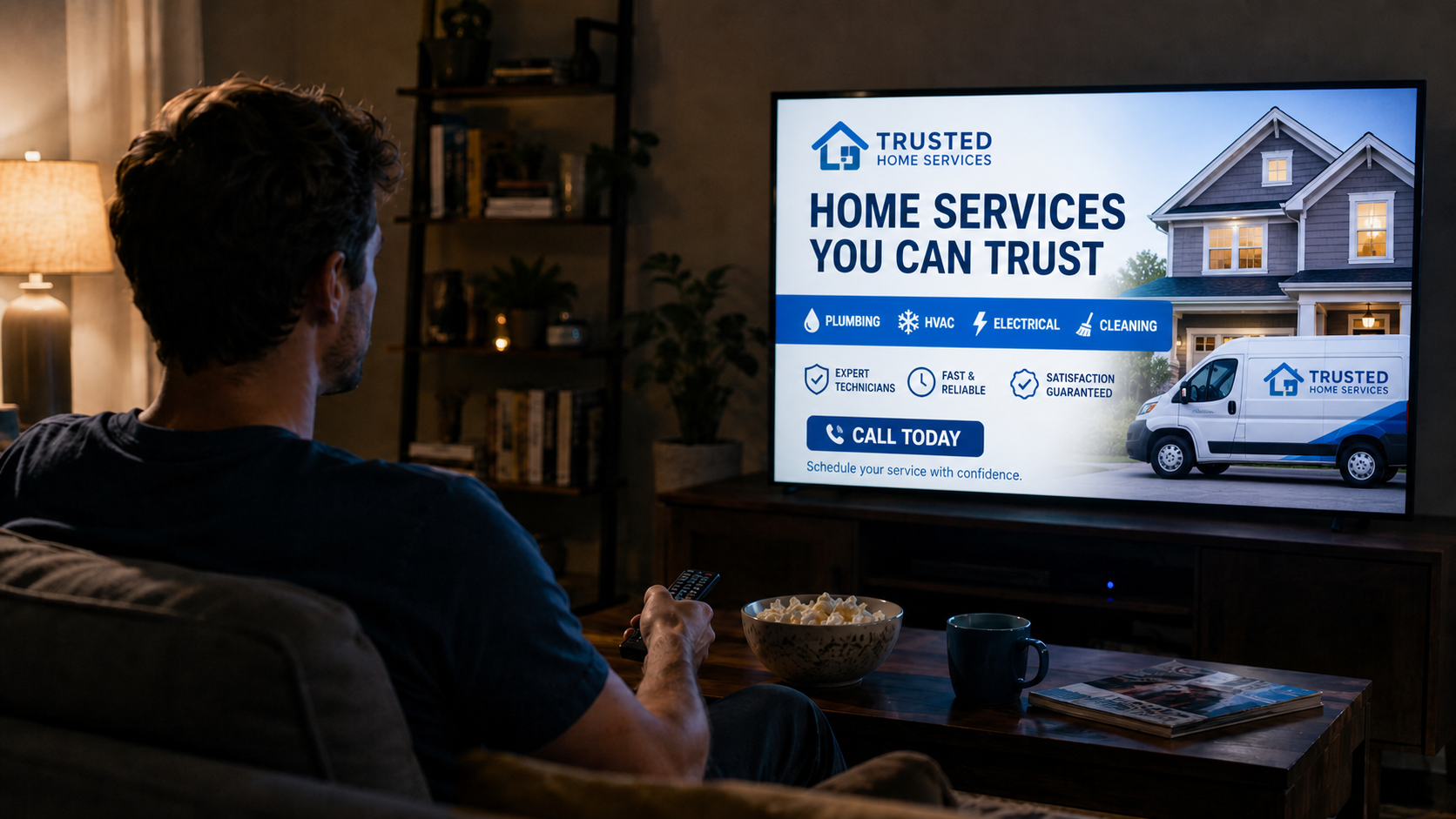
Choosing between CTV and linear TV is not just a media buying question. It is a business decision about reach, audience quality, creative investment, and how clearly you can connect advertising spend to revenue. Linear TV still delivers scale during live programming, whereas CTV gives advertisers more control over audience targeting, frequency, measurement, and optimization.
The best answer is rarely “CTV only” or “linear only.” For many growth-focused companies, the stronger strategy is knowing what each channel does best, then building a measurable plan around the audiences and outcomes that matter most.
What CTV Vs Linear TV Really Means for Advertisers
The phrase CTV Vs Linear TV compares two different ways of delivering television content and selling television ads. Both appear on the biggest screen in the home, but the buying logic behind them is very different. Linear TV is rooted in scheduled programming and broad audience estimates. CTV is rooted in internet-connected viewing, digital data, and impression-level reporting.
For advertisers, that difference affects almost everything: who sees the ad, how much budget is required, how quickly performance can be evaluated, and whether the campaign can be connected to leads, appointments, purchases, or booked jobs.
Bridge the gap between broad reach and digital precision with ESB’s expert media planning
Create a Strategy That Works For Your Business
What Is Linear TV Advertising?
Linear TV advertising refers to commercials placed within scheduled broadcast, cable, or satellite programming. Viewers watch programs at set times, and advertisers buy placements based on channels and demographic estimates.
Linear TV still matters because it can create broad awareness quickly. A regional business might use local broadcast or cable inventory to dominate a market during a seasonal push. A national brand might use prime-time programming to build credibility and reach a large audience at once.
ESB’s traditional media buying approach fits this environment by planning placements around markets, audience behavior, campaign timing, and business goals rather than buying TV simply because it feels familiar.
What Is CTV Advertising?
CTV advertising refers to ads served through internet-connected television environments. Viewers may watch through smart TVs, Roku, Amazon Fire TV, Apple TV, or streaming apps such as Hulu, YouTube TV, and other ad-supported platforms.
CTV keeps the impact of a television screen but uses a buying model closer to digital media. Advertisers can target households by geography, interests, viewing behavior, and other audience signals. They can also monitor impressions, completion rates, frequency, and post-view actions more clearly than traditional TV allows.
That is why CTV is often managed through a programmatic advertising agency partner. Programmatic and OTT buying helps advertisers control where ads run, who they reach, and how campaigns improve over time.
Why the Difference Between CTV and Linear TV Matters
The difference between CTV and linear TV matters because viewer behavior and advertiser expectations have both changed. Audiences are spending more time with streaming platforms, while businesses are under more pressure to prove that every channel contributes to measurable outcomes.
A TV plan that only reports estimated reach is no longer enough for many marketing directors, CMOs, and business owners. They need to know which audiences were reached, what actions followed exposure, and how the campaign influenced revenue.
The modern TV question is not whether people still watch television. It is whether your television investment can be planned, measured, and improved like the rest of your marketing mix.
Every dollar must perform; we align your TV spend with the outcomes that matter
CTV vs Linear TV Advertising: The Key Differences
The core difference in CTV vs linear TV advertising comes down to control. Linear TV gives advertisers broad exposure through scheduled programming. CTV gives advertisers more precise delivery through internet-connected devices and data-driven buying.
Both can be valuable. The right choice depends on campaign objective, target audience, geography, budget, creative assets, and measurement expectations.
Content Delivery and Viewing Experience
Linear TV is scheduled. Everyone watching the same program in the same market sees the same commercial break. The format is familiar and can be powerful for live events, sports, breaking news, and shared viewing moments.
CTV is streamed. Viewers choose what to watch and when to watch it. Ads are delivered inside streaming content across apps, smart TVs, and connected devices. This creates more flexibility, but it also means inventory is fragmented across many platforms.
Here is the simplest way to compare the experience:
- Linear TV delivers scheduled programming to broad audiences.
- CTV delivers streaming content through internet-connected devices.
- Linear TV usually buys audiences by program, market, and demographic.
- CTV usually buys audiences by impressions, household data, geography, and behavior.
- Linear TV is strongest for mass visibility, while CTV is stronger for precision and measurement.
The same creative idea can work across both channels, but the execution should not always be identical. A broad linear spot may need simple mass-market messaging. A CTV version can use tighter audience relevance, QR codes, retargeting logic, or sequential creative.
Audience Targeting, Reach, and Frequency
Linear TV targeting is broad. Advertisers can choose networks, programs, dayparts, and geographic markets that index well for a desired audience. That can work well when the goal is widespread awareness, but it can also create wasted reach if many viewers fall outside the ideal customer profile.
CTV targeting is more precise. Advertisers can build campaigns around household-level targeting. This matters for local and regional companies that cannot afford to pay for an entire designated market area when only part of that market can become a customer.
CTV also gives advertisers more control over frequency. Instead of overexposing the same households, a campaign can cap impressions, adjust delivery, or sequence messages across devices. That helps reduce wasted impressions and protect the user experience.
Measurement, Attribution, and Campaign Optimization
Measurement is where CTV usually has the clearest advantage. Linear TV relies heavily on ratings, panels, GRPs, and modeled reach. Those tools are useful for broad planning, but they are not designed to show exact household exposure or direct conversion paths.
CTV provides more granular reporting. Advertisers can evaluate impressions all the way through to booked-jobs. It is not the same as a paid search click, but it is much more measurable than traditional TV alone.
This is where ESB’s advertising analytics and reporting becomes important. A TV campaign should not live in a reporting silo. When CTV, linear TV, search, social, and CRM data connect inside one measurement view, media decisions become more practical and less political.
Unlock the power of choice by matching the right TV channel to your objectives
When Linear TV Advertising Still Makes Sense
Linear TV is not dead, and smart advertisers should not treat it that way. It remains useful when a campaign needs broad credibility or market-level visibility.
The key is using linear TV for the jobs it still performs well, not asking it to behave like a lower-funnel digital channel.
Mass Reach, Live Events, and Brand Awareness
Linear TV can still create fast awareness. Major events can place a brand in front of large audiences in a short window. That shared viewing experience is hard for fragmented streaming platforms to fully replicate.
Linear TV is often a strong fit when the campaign goal is:
- Brand awareness across a broad region
- Event-driven promotions or seasonal campaigns
- Credibility in a local or regional market
- Older audience reach
- Sponsorship or association with specific programming
For companies with enough budget and the right market opportunity, linear can still be a valuable part of the media mix. The challenge is making sure the buy is planned strategically, not purchased out of habit.
Older Audiences, Broadcast Networks, and Local TV Markets
Linear TV often performs better with older demographics than with younger streaming-first audiences. If a brand needs to reach adults who still watch broadcast networks and traditional live programming, linear may deliver efficient exposure.
Local market strategy matters too. A home services company, healthcare provider, retailer, or regional brand may use linear TV to establish visibility in a specific market while using CTV and paid search to capture measurable demand.
That is where a TV and radio media buying agency can help evaluate inventory, negotiate placements, interpret post-log performance, and coordinate traditional channels with the rest of the campaign.
When CTV Advertising Is the Better Fit
CTV is usually the better fit when a campaign needs precision, flexibility, and clearer performance reporting. It is especially useful for advertisers who want to test television without the minimum spend and long planning cycles often associated with linear TV.
CTV also works well when the audience is specific. A business can focus on homeowners, ZIP codes, income ranges, or interest groups instead of paying to reach every household watching a broad program.
Household-Level Targeting and First-Party Data
Household-level targeting is one of CTV’s biggest advantages. Advertisers can use audience data to place ads in front of more relevant viewers, which is useful when a product or service only applies to a defined group.
For example, a roofing company does not need to advertise to renters across an entire metro area. An HVAC company may want to reach homeowners before peak heating or cooling seasons. A plumbing company may want to target households in service areas where emergency repair demand is highest.
Good CTV targeting often starts with three questions:
- Who is most likely to become a qualified customer?
- Which geography can the business realistically serve?
- Which first-party or CRM data can improve audience quality?
When those answers guide the buy, CTV becomes more than streaming TV advertising. It becomes a way to reduce wasted reach and align media spend with real business opportunity.
Performance Reporting, Retargeting, and Measurable ROI
CTV also supports stronger performance reporting. Advertisers can see whether ads were delivered, how often households were exposed, how many viewers completed the spot, and whether exposed audiences took follow-up actions.
That data can support retargeting and sequential messaging. A viewer who sees a CTV ad can later receive messaging that reinforces the same offer. This creates a more connected customer journey than a standalone TV spot.
For ESB, the point is not to drown clients in dashboards. The point is to connect media to measurable ROI, booked jobs, leads, appointments, sales activity, and revenue. That requires campaign measurement, CRM attribution, and disciplined optimization.
Build a Smarter TV Media Buying Strategy With Both Channels
The strongest TV strategy may use CTV and linear TV together. Linear can create broad awareness. CTV can add precision, retargeting, and measurement. When planned together, the channels can support each other instead of competing for budget.
The mistake is treating TV as a single line item. A smarter approach defines the role of every dollar before the campaign launches.
How to Allocate Budget Between CTV and Linear TV
Budget allocation should begin with the campaign objective. A mass-market brand launch may justify a heavier linear investment. A local lead generation campaign may lean more heavily into CTV. A regional growth campaign may use linear for credibility and CTV for incremental reach among higher-value households.
ESB’s campaign strategy development process helps answer practical planning questions before spend is committed:
- Is the goal awareness, demand generation, lead quality, sales lift, or market dominance?
- Does the target audience still watch linear TV, or are they primarily streaming?
- What geography should be included or excluded?
- What budget is available for media and creative production?
- How will success be measured after launch?
The answers determine whether the plan should favor CTV, linear TV, or a blended cross-screen advertising strategy.
Combine the scale of linear with the precision of CTV for a dominant market presence
How ESB Connects TV Advertising to Revenue Attribution
ESB Advertising is built for businesses that want media strategy tied to outcomes, not vanity metrics. The differentiator is Mackdata, ESB’s proprietary attribution platform. Mackdata connects campaigns to CRM activity and revenue signals so advertisers can understand which channels contribute to leads, appointments, booked jobs, and sales outcomes.
That matters because a TV campaign should not be judged only by impressions. It should be evaluated by what happened after the impression. Did branded search rise? Did site traffic increase? Did calls, forms, booked appointments, or CRM opportunities improve? Did certain markets or audiences perform better than others?
Strong creative still matters. ESB’s creative services team can support campaign assets that fit both the big-screen environment and the measurement goals behind the buy.
Ready to Run CTV and Linear TV for Your Advertising Campaign?
At ESB Advertising, we help you decide when CTV, linear TV, or a blended media strategy makes the most sense for your goals. Our team connects audience targeting, traditional media buying, programmatic placement, creative production, and Mackdata attribution so your campaign is built around measurable business outcomes.
Whether you need broader market reach, more efficient household-level targeting, or clearer revenue reporting, we can help you plan and optimize a TV advertising campaign with confidence.
Better TV planning starts with a clearer view of what each channel is supposed to prove
Request a Media Strategy Consultation
Frequently Asked Questions About CTV Vs Linear TV
Is CTV better than linear TV advertising?
CTV is better when you need precise targeting, flexible budgets, retargeting, and clearer performance reporting. Linear TV may be better when you need mass reach, live-event visibility, or broad awareness in a market. The best choice depends on your audience, budget, geography, and measurement goals.
Is linear TV still worth buying?
Linear TV can still be worth buying for campaigns that need broad exposure, credibility, or older-audience reach. It is strongest around live events, local news, sports, and traditional broadcast or cable programming. It works best when paired with a measurement plan that shows how TV activity supports business outcomes.
Should I run CTV and linear TV together?
Many advertisers should consider running both if the budget supports it. Linear TV can build broad awareness, while CTV can add targeted reach, frequency control, retargeting, and more measurable performance. A blended plan is strongest when both channels are connected to one campaign strategy and one reporting framework.
