
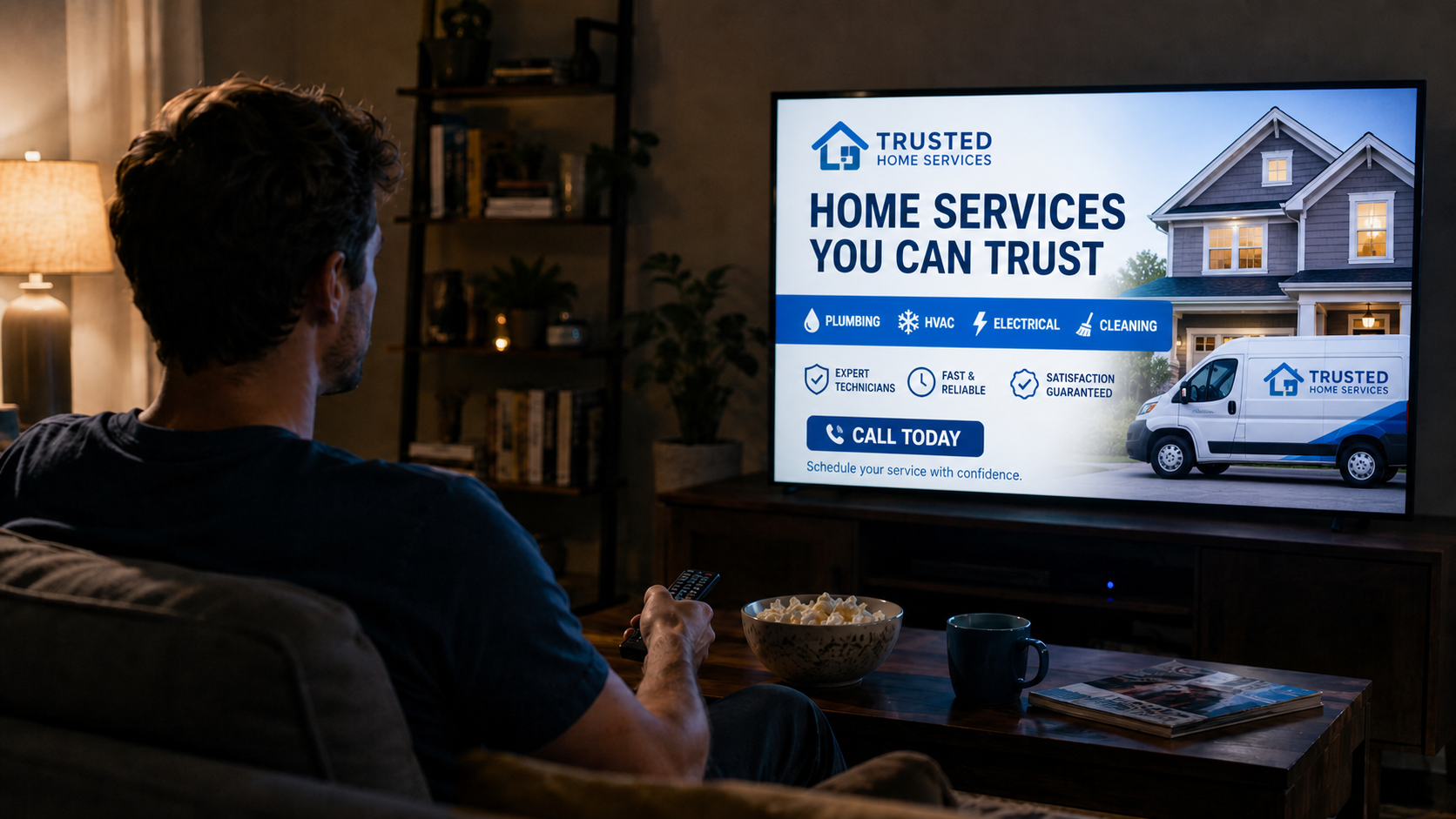
The best way to manage linear and streaming TV ads is not to treat them as separate campaigns with separate scorecards. It is to manage them through a multi-touch marketing perspective that connects both channels to real business outcomes: qualified leads, booked jobs, appointments, sales opportunities, and revenue.
That shift matters because TV is no longer one thing. A customer might see a broadcast spot during local news, watch a CTV ad on Roku later that week, search for your brand on Google, and finally convert through a landing page or phone call. If each channel is measured alone, the campaign can look fragmented. If every touchpoint is connected inside a shared attribution framework, TV becomes easier to plan, optimize, and defend.
For growth-focused businesses, the goal is not only to buy more media. The goal is to understand which media is moving people closer to revenue.
Why Linear and Streaming TV Ads Should Be Managed Together
Linear TV and streaming TV work best when they are planned as parts of one customer journey. Linear can still deliver broad awareness, especially for live programming, local markets, and high-reach moments. Streaming TV can add audience targeting, tighter frequency control, and more granular reporting. The value comes from how the two channels support each other.
When a campaign uses traditional media buying and streaming together, the question should not be, “Which channel gets credit?” The stronger question is, “How did each exposure help create the final response?” That is where a unified TV advertising strategy becomes more useful than a channel-by-channel report.
Linear TV Still Delivers Reach, Streaming Adds Precision
Linear TV advertising remains powerful because it can create shared attention quickly. Broadcast and cable placements can put a message in front of large audiences during predictable viewing windows. That makes linear especially useful for brand awareness, market presence, seasonal promotions, and local visibility.
Streaming TV advertising plays a different role. CTV, OTT, and other streaming placements help advertisers reach more specific households, apply audience segments, control frequency, and measure engagement in ways that traditional television historically could not. A streaming campaign can reinforce the message after a linear exposure or reach viewers who no longer watch scheduled TV.
The strongest plan does not force a choice between reach and precision. It uses reach to introduce the brand, then uses precision to reinforce the message with the households most likely to act.
TV works harder when every screen is treated as part of the same revenue path
Create a TV Advertising Strategy
The Problem With Managing Each Channel Separately
The biggest management problem is not lack of data. It is disconnected reporting. Linear TV may be judged by ratings, reach, and frequency. Streaming TV may be judged by impressions, completion rate, household targeting, or conversions. Search, social, and CRM systems may tell another story entirely.
When those reports sit apart, teams can make the wrong budget decisions. A linear spot might create branded search demand that gets credited to paid search. A streaming ad might help close a lead that was first introduced through broadcast. A high-impression campaign might look successful even if it never creates pipeline quality.
A cleaner measurement model looks for connection points:
- Exposure data from linear, CTV, OTT, and digital video
- Website visits, calls, form fills, and chat activity
- CRM stages, lead quality, appointments, estimates, and booked jobs
- Revenue, customer value, and repeat purchase signals
This is why TV management needs attribution, not just reporting
Multi-Touch Attribution: The Best Way to Manage Linear and Streaming TV Ads
The best way to manage linear and streaming TV ads is through multi-touch attribution because it reflects how people actually respond to advertising. Most customers do not see one ad and immediately buy. They move through a series of exposures and follow-ups before revenue is created.
For ESB Advertising, that perspective matches the way modern campaigns should be managed. The media plan, creative, digital response path, CRM activity, and revenue reporting all need to work together. Otherwise, advertisers are left optimizing for impressions instead of outcomes.
Connect TV Exposure to CRM Activity and Revenue
A revenue-focused TV strategy starts by connecting campaign exposure to CRM activity. That means the team is not only asking how many people saw the ad. It is asking whether those exposures closed revenue.
ESB Advertising’s Mackdata platform is built around that idea: connect marketing activity to CRM and revenue, not just clicks or impressions. In a TV context, that can mean comparing air times, streaming impressions, geographic exposure, call volume, and more.
A practical attribution process usually follows four steps:
- Define the business outcome before the media plan is finalized.
- Tag and organize every trackable response path, including calls, forms, landing pages, and CRM fields.
- Compare linear, streaming, search, social, and website activity inside one measurement view.
- Optimize future spending toward the placements that influence qualified pipeline and revenue.
That process is not about giving every dollar of credit to one channel. It is about understanding the role each channel plays.
Measure Reach, Frequency, and Incremental Response Together
Reach and frequency still matter, but they are incomplete without response and revenue context. A linear campaign may deliver broad reach, but some audiences may be overexposed. A streaming campaign may be highly targeted, but it may not create enough incremental reach if the audience is too narrow.
The management question becomes: what combination creates the best incremental response? That requires measuring reach, frequency, audience overlap, and revenue signals together. If a market sees strong reach but weak lead quality, the plan may need better creative, tighter audience targeting, or a revised offer. If streaming creates efficient conversions but lacks scale, linear may still be needed to build awareness.
This is where advertising analytics becomes central. Dashboards should help marketers see how each channel contributes, not just how each channel performs in isolation.
See the full journey from first clip to final sale. Experience true performance-based TV management
Learn More About Multi-Touch Attribution
A Practical Framework for Managing TV Advertising Across Screens
Managing TV ads across screens requires a shared operating system. The entire marketing and reporting plan should be created together before the campaign launches. If measurement is added after the fact, teams usually end up with partial data and unclear conclusions.
The following framework keeps TV advertising focused on revenue instead of channel noise.
Start With Shared Audiences and Business KPIs
A strong advertising strategy begins with the business goal. For home services companies such as plumbers, roofers, and HVAC contractors, that usually means tracking booked jobs, cost per scheduled appointment, qualified service calls, and estimate requests. The media plan should be built around the outcomes that matter most to the business, not just impressions or clicks.
Once the KPI is clear, the audience plan becomes easier to manage. Linear TV can be used to cover priority markets and high-value programming. Streaming TV can layer in audience behavior, and demographic filters,
Shared KPIs prevent the common mistake of judging every channel by its native metric. The final scorecard should answer three business questions:
- Did we reach the right market often enough to matter?
- Did the campaign create measurable response?
- Did that response turn into qualified revenue opportunities?
Align Creative, Media Buying, and Optimization
TV performance is not only a media buying issue. Creative has a major effect on recall, response, and attribution. A campaign with strong media placement but unclear messaging can still underperform. A campaign with strong creative but poor frequency control can waste budget. That is why creative services and media strategy should work together. The message should match the channel role.
Optimization should look at the full system: which audiences saw the message, which creative versions ran, which markets responded, which calls or forms entered the CRM, and which opportunities became revenue.
Use Dashboards to Compare Real Business Outcomes
A useful dashboard does more than display impressions. It should compare media activity against business outcomes in plain language. This is where closed-loop reporting changes the conversation. Instead of asking whether streaming or linear is “working” in general, the team can see which combinations are creating better outcomes.
Deploy a proven system built for ROI. We simplify complex media into clear business growth
What Better Linear and Streaming TV Management Looks Like in Practice
Better management makes TV advertising easier to understand, optimize, and connect to revenue. For home services companies,, linear and streaming TV should not compete for credit. They should work together to show which channels drive calls, appointments, booked jobs, and completed work.
The Benefits of Effective TV Advertising Management
Less Waste From Duplicated Reach
Duplicated reach can make a campaign look bigger than it really is. If the same household is counted across linear TV, CTV, OTT, and digital channels, advertisers may overspend on saturated audiences while missing new homeowners who need service.
Smarter Frequency Across Every Screen
A multi-touch view helps manage how often people see the message. Linear TV can build local awareness, while streaming can reinforce key audiences with more precision. The goal is consistent visibility without making the brand feel repetitive or overexposed.
Better Budget Allocation Based on Revenue
The best budget decisions come from revenue signals, not impressions alone. If linear TV drives call volume in one market and CTV produces higher-quality booked jobs in another, the plan can shift spend toward the channels creating measurable business outcomes.
Experience a seamless path to profitability. We make your TV advertising smarter, faster, and better
Build a Revenue-Focused TV Advertising Strategy
At ESB Advertising, we manage linear and streaming TV ads by connecting every screen to real revenue outcomes. Our team brings media buying, creative production, Mackdata reporting, and multi-touch attribution together so you can see which campaigns drive calls and book jobs. Instead of guessing which channel deserves credit, we help you understand how each touchpoint contributes to growth and where your next advertising dollar should go.
Ready for a media partner that cares about ROI? Let’s scale your business together now
Schedule a TV Advertising Consultation
Frequently Asked Questions About Managing Linear and Streaming TV Ads
Should linear TV and streaming TV be measured separately?
They can be reported separately, but they should not be managed separately. Linear TV and streaming TV influence the same customer journey, so the better approach is cross-channel measurement that shows reach, frequency, response, and revenue together.
Can TV ads really be tied to revenue?
Yes, when the campaign is built with tracking and CRM integration from the start. TV exposure can be compared against calls, form fills, web activity, lead quality, pipeline movement, booked jobs, and sales. The connection is strongest when the media plan, landing pages, phone tracking, and CRM fields are aligned before launch.
What metrics matter most for TV ad management?
Reach, frequency, impressions, and completion rate matter, but they should be tied to business metrics. The most useful scorecard includes cost per qualified lead, cost per booked appointment, revenue influenced, incremental response, and return on ad spend.
Is streaming TV better than linear TV?
Streaming TV is not automatically better than linear TV. It usually offers stronger targeting and measurement, while linear TV can still provide broad market reach and high-impact visibility. The best strategy depends on the audience, geography, budget, creative, and revenue goal.
