
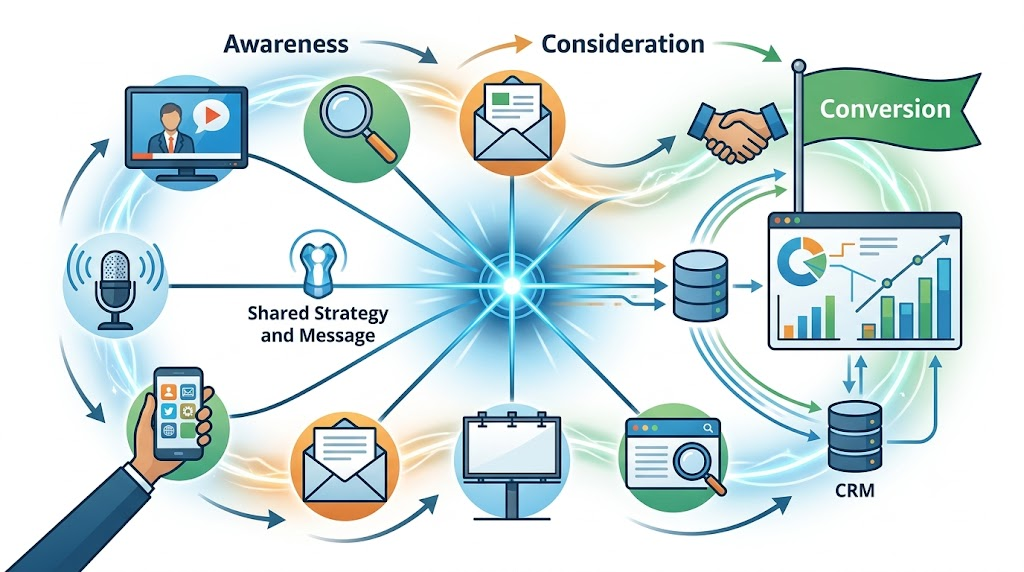
Integrated marketing brings every part of a campaign together around a shared strategy, audience and message. Instead of allowing paid search, social media, television, email and other channels to operate independently, it gives each one a defined role within a connected customer journey.
That does not mean publishing an identical advertisement everywhere. Effective integrated marketing adapts creative assets and calls to action for each platform while preserving the core message, brand identity and campaign goals.
For businesses, the real value extends beyond consistency. A coordinated marketing strategy can reduce duplicated work, improve customer engagement and make campaign performance easier to measure. When advertising data connects with CRM and sales information, teams can also see which combinations of touchpoints contribute to qualified leads, booked jobs and revenue.
What Does Integrated Marketing Mean?
Integrated marketing is a coordinated approach in which a business aligns its messaging, creative, media channels and measurement around common commercial objectives. Every channel supports the same wider campaign rather than competing for attention or reporting success in isolation.
A customer may first encounter a television commercial, later see a paid social advertisement, search for the company on Google and finally convert through a landing page. Integrated planning ensures those interactions feel connected, relevant and recognisable.
Stop wasting budget on disconnected ads. Let ESB Advertising build your seamless customer journey
Build an Integrated Marketing Campaign
Why Is an Integrated Marketing Strategy Important?
An integrated marketing strategy helps a business present a clear identity while making better use of its channels, creative resources and campaign data. When teams work from the same objectives, marketing becomes easier to recognise, more efficient to deliver and more useful to measure against commercial outcomes.
- Stronger Brand Recognition: Consistent messaging, campaign themes and visual identity help customers recognise the business across digital advertising, social platforms, television, radio and other marketing touchpoints.
- A More Cohesive Customer Experience: Connected channels reduce conflicting messages and create a smoother journey from the first impression through consideration, conversion, onboarding and ongoing customer communication.
- Greater Marketing Efficiency: Shared campaign assets, coordinated teams and aligned media plans reduce duplicated work, support content repurposing and help businesses allocate their marketing budgets more effectively.
- Better Customer Engagement and Conversion: Reinforced, relevant messaging reaches customers in different formats and helps guide them toward the next action as they progress through the buyer journey.
- Clearer Measurement and Marketing ROI: Integrated campaign planning helps teams compare channel performance, evaluate combined touchpoints and determine which activities contribute to qualified leads, sales and measurable revenue.
Drive higher conversions and clearer ROI. Contact ESB Advertising to launch your efficient campaign
What Channels Can an Integrated Marketing Campaign Include?
An integrated marketing campaign can combine paid, owned and traditional media channels. The right mix depends on the target audience, campaign objectives, buying journey, budget and geographic reach.
Channel selection should be based on the role each platform can perform. Some channels build awareness, some capture demand, and others nurture prospects or reinforce trust. Integration comes from coordinating those roles around a common strategy.
Coordinating Digital Advertising, Social Media and Email Marketing
Digital channels support precise targeting, rapid optimisation and measurable customer actions. They can introduce a campaign, respond to existing demand, retarget interested users and maintain communication after someone becomes a lead or customer.
Digital Advertising
Digital advertising can include paid search, display, online video and programmatic advertising. These channels help marketers reach defined audience segments, capture active demand and measure clicks, conversions and engagement. Programmatic campaigns can also distribute video and display creative across websites, apps and connected TV inventory.
Social Media Marketing
Social media marketing supports audience engagement, brand awareness, campaign amplification and retargeting. Paid social campaigns can reach defined customer groups, while organic content provides ongoing communication. The strongest social creative reflects the broader campaign message while adapting its format to each platform and audience behaviour.
Email Marketing
Email marketing helps businesses nurture leads, communicate offers, retain customers and reinforce messages introduced through other channels. Segmentation and personalisation can make communication more relevant, while automated sequences guide customers through follow-up actions based on their interests, enquiries, purchases or stage in the customer journey.
Connecting Television, Radio, Direct Mail and Outdoor Advertising
Traditional and offline media can add reach, repetition and local visibility to an integrated campaign. These channels are particularly valuable when the target audience cannot be reached efficiently through digital media alone.
Television Advertising
Television advertising combines visual storytelling with broad audience reach. Broadcast, cable and connected TV campaigns can demonstrate a problem, introduce a brand and build recognition at scale. Consistent creative themes can then be reinforced through paid search, social media, landing pages and follow-up communication.
Radio Advertising
Radio advertising creates repeated exposure during commuting, work and daily routines. It can support local promotions, seasonal campaigns, events and brand awareness. Memorable audio messages become more effective when the same offer, slogan or call to action appears across digital advertising and other campaign channels.
Direct Mail
Direct mail places a physical message in front of selected households or customer groups. Personalised offers, trackable phone numbers, QR codes and dedicated landing pages can connect the offline interaction to digital measurement. It is particularly useful when geographic targeting or tangible brand communication supports the campaign strategy.
Outdoor Advertising
Outdoor advertising includes billboards, transit placements and digital out-of-home media. These formats provide repeated visibility within specific geographic areas and work best with concise messaging. They can reinforce a wider campaign by repeating the same visual identity, offer or brand promise used across television and digital media.
Blend digital and traditional channels seamlessly. Let ESB Advertising coordinate your perfect media mix
Explore Our Marketing Channels
How to Create an Integrated Marketing Campaign
Building an integrated campaign requires more than selecting a list of media channels. The business must determine who it wants to reach, what action it wants the audience to take and how each channel will support that journey.
A practical campaign-planning process includes four stages.
1. Define the Target Audience, Campaign Goals and Core Message
Start with the commercial outcome, such as appointments, store visits, qualified leads, online sales or customer retention. Define the target audience using customer needs, location, buying behaviour and first-party data.
Create one core message that connects the customer’s problem with your value and works across every channel. Then translate campaign goals into measurable KPIs, including reach, frequency, conversion rate, cost per lead, lead quality and sales revenue, so teams can track performance and optimise decisions.
2. Assign Clear Roles Across Every Marketing Channel
Each marketing channel should have a defined purpose. Without clear roles, teams may duplicate activity or expect every platform to generate the final conversion.
A connected channel plan might assign responsibilities such as:
- Television and connected TV build broad awareness.
- Social media introduces creative variations and retargets engaged audiences.
- Paid search captures people actively looking for the service.
- Email nurtures leads and supports customer retention.
- Direct mail reinforces an offer within priority service areas.
- Landing pages convert traffic and record campaign responses.
This structure allows teams to evaluate whether each platform performed its intended function. It also prevents channel-specific reporting from overlooking the combined influence of multiple customer interactions.
3. Align Creative Assets, Timing and Calls to Action
Campaign assets should stay consistent yet platform-specific: videos build stories, search addresses intent, social highlights benefits, and emails provide details. Always coordinate launch timing by aligning media, landing pages, and sales teams to preserve momentum. Finally, match calls to action directly to the customer’s journey stage, offering softer next steps for new audiences and direct asks for highly active prospects.
4. Measure Performance Across the Customer Journey
Performance measurement should reflect how customers actually encounter the campaign. A person may view several advertisements before searching for the brand, calling the business or completing a form.
Track the interactions available within each platform, but do not assume the final click deserves all the credit. Cross-channel reporting, CRM integration and multi-touch attribution provide a broader view of campaign influence.
Useful measurements can include:
- Reach and frequency
- Website engagement
- Calls and form submissions
- Cost per lead
- Qualified lead rate
- Conversion rate
- Customer acquisition cost
- Booked appointments or jobs
- Sales revenue
- Customer lifetime value
The most useful reporting connects media exposure and lead sources with what happens after conversion.
Don’t guess your marketing strategy. Let ESB Advertising map out your winning campaign today
Work With ESB Advertising to Create an Integrated Marketing Strategy
At ESB Advertising, we build integrated marketing strategies that sync your brand voice across every single touchpoint. We don’t believe in isolated campaigns; instead, our team aligns your video storytelling, targeted digital ads, and social content to work as a unified ecosystem.
By coordinating your launch timing and matching your calls to action perfectly to the customer’s journey, we ensure no momentum is lost. Let’s partner together to turn cross-channel engagement into measurable downstream revenue.
